
 Image 1 of 2
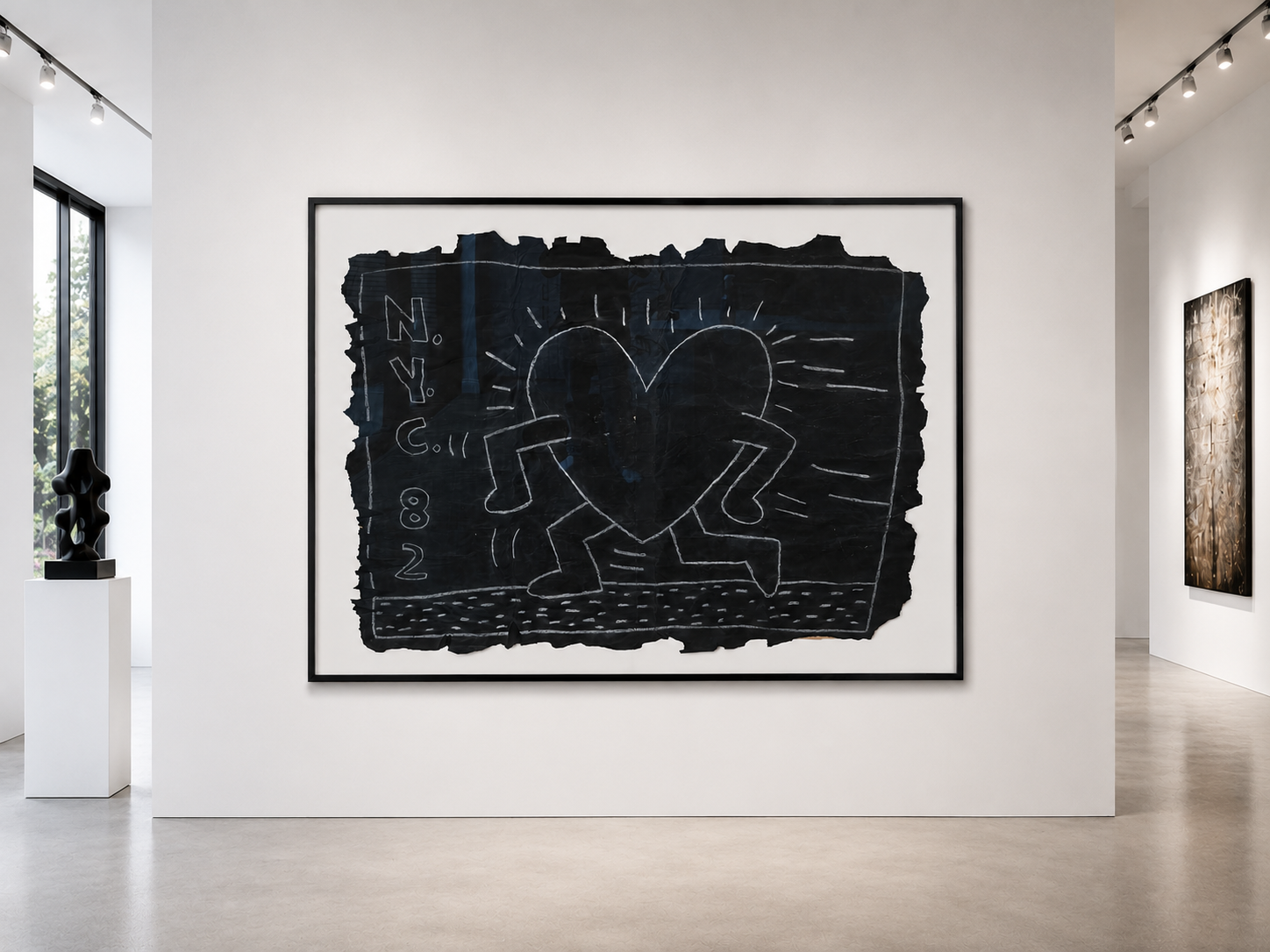 Image 2 of 2
About Keith Haring
Keith Haring (1958–1990) remains one of the most recognisable and influential artists of the late twentieth century. Fusing the energy of New York's street culture with bold graphic imagery, he created a visual language that continues to resonate with audiences worldwide.
Born in Pennsylvania, Haring studied art before moving to New York City in the late 1970s to attend the School of Visual Arts. Immersed in the city's thriving creative scene, he emerged alongside artists such as Jean-Michel Basquiat and Kenny Scharf, transforming the urban landscape with his distinctive public drawings. His spontaneous chalk works in New York's subway stations quickly became iconic, bringing contemporary art directly to the public.
Haring's work is celebrated for its vibrant compositions, rhythmic lines and instantly recognisable symbols, often exploring themes of love, movement, unity, social justice and humanity. Beyond his artistic achievements, he was a passionate activist who used his platform to raise awareness of issues including the AIDS epidemic, children's welfare and equality. In 1989 he established the Keith Haring Foundation, which continues to support educational initiatives and organisations focused on children's programmes and HIV/AIDS awareness.
Despite his career lasting little more than a decade, Haring's impact on contemporary art has been profound. His works are held in many of the world's leading museums and collections, including the Museum of Modern Art in New York, the Whitney Museum of American Art, the Centre Pompidou in Paris and Tate in London.
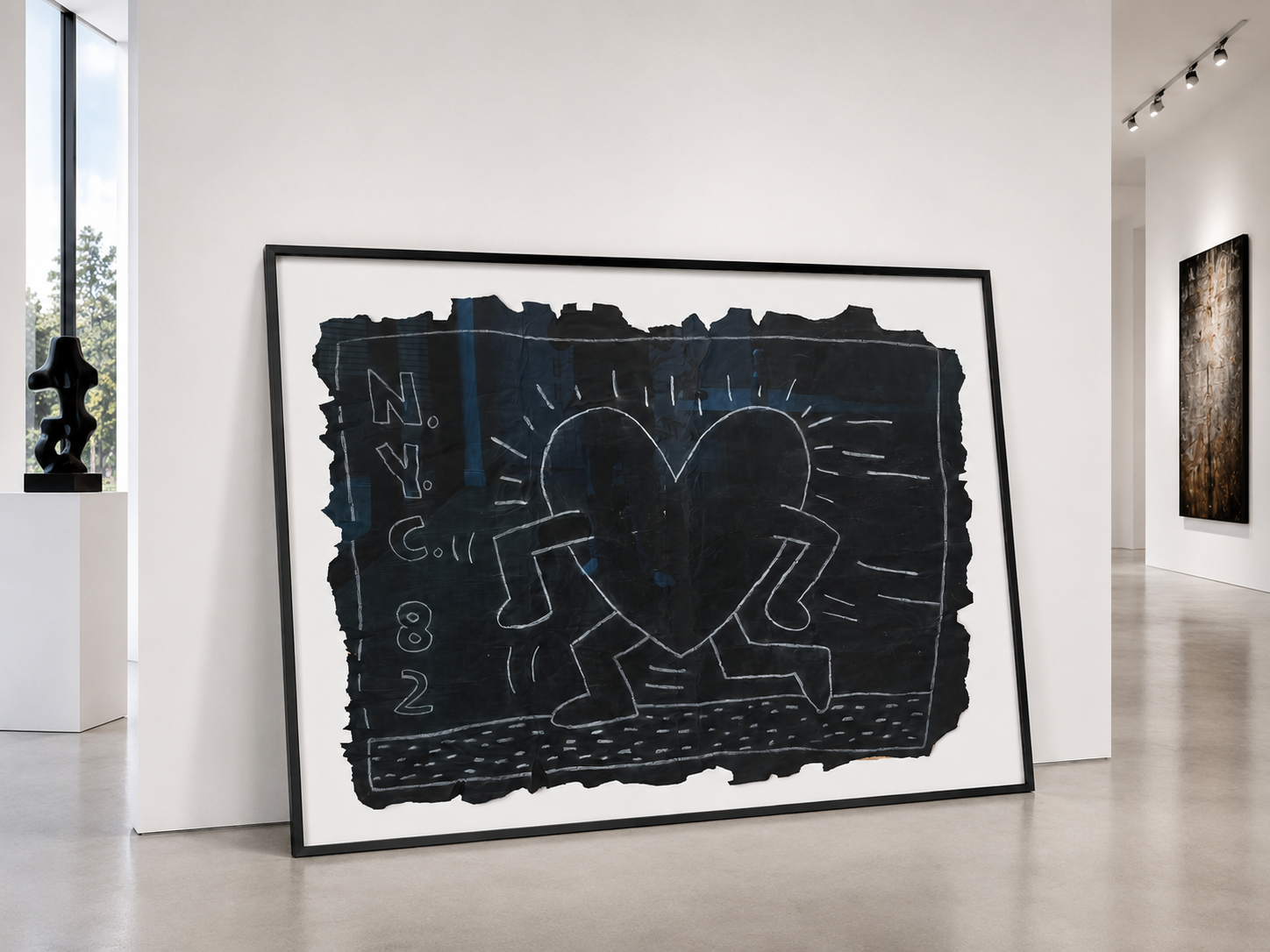
The artwork featured here is one of Haring's celebrated Subway Drawings—a series of chalk drawings executed on unused advertising panels throughout the New York subway system during the early 1980s. Created in white chalk on black paper with its original irregular edges, the composition showcases his celebrated Running Heart motif, capturing the immediacy, optimism and unmistakable visual energy that define his enduring legacy.
